A North Carolina Homeowner’s Guide (2026)
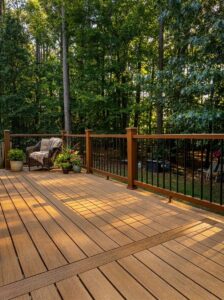
Quick Answer: For most homeowners, yes — Trex is worth the extra money. It costs more upfront than pressure-treated lumber, but you’re not paying for the material alone. You’re paying to skip the sanding, staining, and board replacement that pressure-treated decking demands every few years, and to get a deck that still looks like this photo in year 15, not just year one.
We get this question on almost every consultation call, so instead of a generic pros-and-cons list, here’s what actually matters when you’re deciding between Trex and wood for a deck in Central North Carolina.
What Makes Trex Different From a Regular Wood Deck?
Trex isn’t just “plastic decking.” It’s a composite of reclaimed wood fibers and recycled plastic, capped with a polymer shell that does the actual work of resisting the outdoors:
- The cap, not the core, is what protects it. The outer shell is what blocks moisture, UV, and staining — which is why a scratch that goes through the cap is the one thing that can compromise a board, and why we tell homeowners to keep sharp metal (grill scrapers, skate edges, dog nails on younger pups) off the decking when possible.
- Hidden fastener systems. Most Trex lines use a hidden clip system that fastens boards from the side instead of face-screwing through the top. That’s not just a cosmetic choice — no screw holes means no entry points for water to get into the board from above, which is one of the more common ways composite decking used to fail in early generations of the product.
- Fade and stain resistance is built into the cap, not applied as a coating, so it doesn’t wear off the way a stain does on wood.
- Manufacturer warranties on Trex’s better lines run 25–50 years against rot, fading, and staining — a warranty length no pressure-treated lumber manufacturer will touch, because wood is a natural product and nobody can warranty how it weathers.
Is It Actually Worth the Extra Money?
Here’s the honest comparison, not the marketing version.
Pressure-treated wood:
- Lower material and install cost upfront.
- Needs re-staining or sealing roughly every 1–3 years in our NC humidity and sun — skip it and the boards gray out, cup, and start splintering.
- Individual boards can crack, warp, or twist even with regular maintenance, especially in the first few summers as the lumber dries out.
- Realistic board-replacement timeline is 10–15 years before the deck surface needs significant rework.
Trex composite:
- Higher installed cost — typically 20–40% more than pressure-treated for the decking surface itself, depending on the line.
- No staining, sealing, or annual maintenance. A seasonal wash with soap and water is genuinely all it needs.
- Doesn’t crack, splinter, or warp the way wood does, and won’t need board-by-board replacement the way a wood deck eventually does.
- Long-term cost often evens out or comes out ahead of wood once you factor in what you’d have spent on stain, sealer, and your own weekends over 15–20 years.
The math isn’t the same for every homeowner. If you’re planning to sell in two years, pressure-treated might make more sense. If you’re building the deck you’re going to grill on for the next two decades, Trex usually pays for itself in maintenance you never have to think about again.
Why Homeowners Choose the Look, Not Just the Material
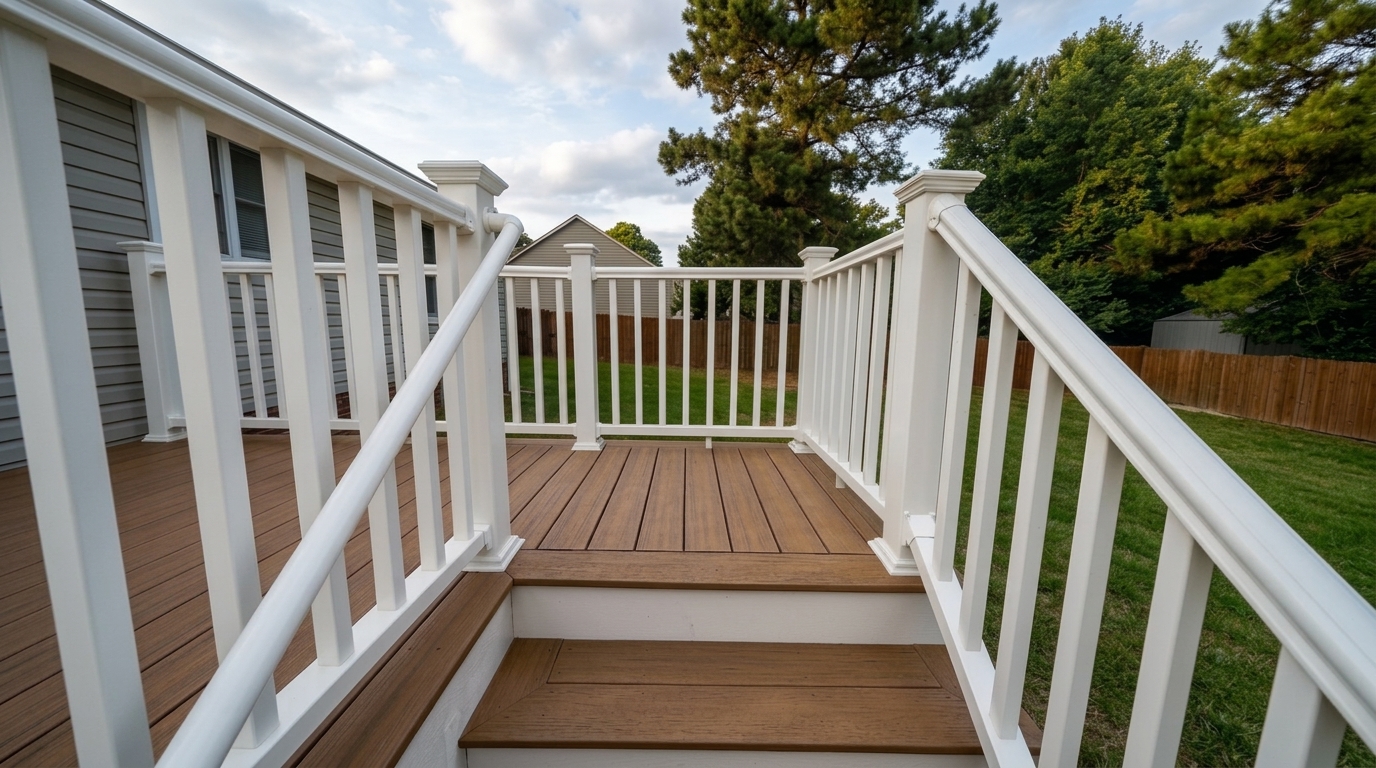
This photo is a good example of why. It’s a Trex-style deck in warm, natural wood tones with a crisp white vinyl railing — the kind of pairing that works with almost any exterior, whether your siding is light gray like this home or the tan-and-brick combination we see on a lot of Central NC ranch homes. Composite decking in a warm wood tone photographs (and lives) like real hardwood, but without the color shifting to gray within a season the way an unmaintained wood deck does. It’s a modern material that still reads as timeless instead of “plastic-looking,” which used to be the actual criticism of early composite decking a decade or two ago.
Common Questions We Get About Trex
Does Trex get hot in direct sun? Yes — like any dark, dense material in full sun, darker composite colors can get warmer underfoot than a lighter-colored board. If your deck gets afternoon sun with no shade, we typically steer homeowners toward the lighter tones in a manufacturer’s lineup, which run noticeably cooler than the deep browns.
Does Trex fade over time? All exterior materials fade some with UV exposure, but composite decking fades far less than wood or paint because the color runs through the cap rather than sitting on top of it as a coating. What fading does occur typically happens in the first year and then levels off, rather than continuing to gray out year after year the way unsealed wood does.
Can Trex rot? No — because there’s no exposed organic wood surface for moisture to get into, composite decking doesn’t rot the way pressure-treated lumber can. The framing underneath (which is still pressure-treated lumber on almost every deck, composite or not) can still rot if it’s not built and flashed correctly — which is exactly why the framing and ledger details matter as much as the decking material you choose on top of it.
Is composite decking slippery when wet? Most modern Trex lines have a grooved or embossed surface texture specifically to improve wet traction, and in our experience it performs at least as well as a wood deck when wet — often better, since it doesn’t develop the slick, worn-smooth spots that old painted or sealed wood decking gets over time.
How long does a Trex deck actually last? With proper framing underneath it, a Trex deck surface is built to outlast most homeowners’ time in the house — 25 to 30+ years is realistic for the decking itself, backed by the manufacturer’s warranty. The framing underneath still has its own service life depending on how it was built and flashed, which is where hiring a builder who takes ledger flashing and footings seriously matters just as much as the brand of decking on top.
Thinking About Upgrading Your Backyard?
If you’re weighing Trex against pressure-treated for a new deck — or you’re tired of re-staining a wood deck every couple of summers — contact Titan Decks for a free consultation and estimate. We build in Sanford and across Central North Carolina, and we’ll walk you through what actually makes sense for your home, your budget, and how you plan to use the space.